
Fitness apps
Exercise form scoring
Compare a rep's joint trajectory to a correct template and flag form breakdown in real time.
We extract joint-level kinematics and gait parameters from ordinary video — the insight that today requires a motion-capture lab, delivered as an embeddable model for fitness, elderly-care, sports, and physiotherapy.
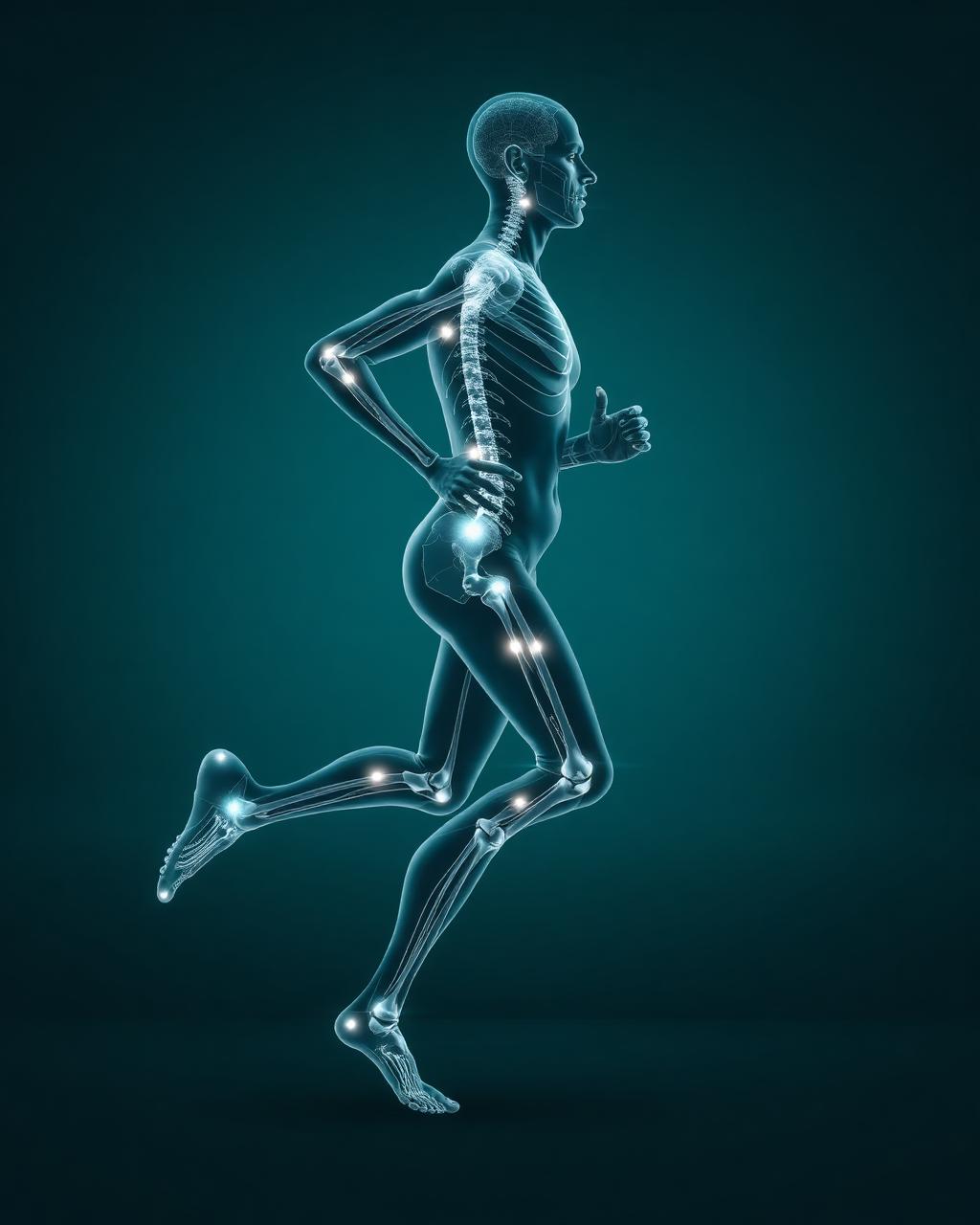
Any phone or fixed camera. No capture suits, no markers.
2D keypoints plus full-body 3D reconstruction per frame.
Temporal transformers resolve 3D joint-angle trajectories.
Gait parameters, form scores, and matched-norm deviations.
Compare a rep's joint trajectory to a correct template and flag form breakdown in real time.

Track gait variability and stepping speed over weeks to surface decline before a fall happens.
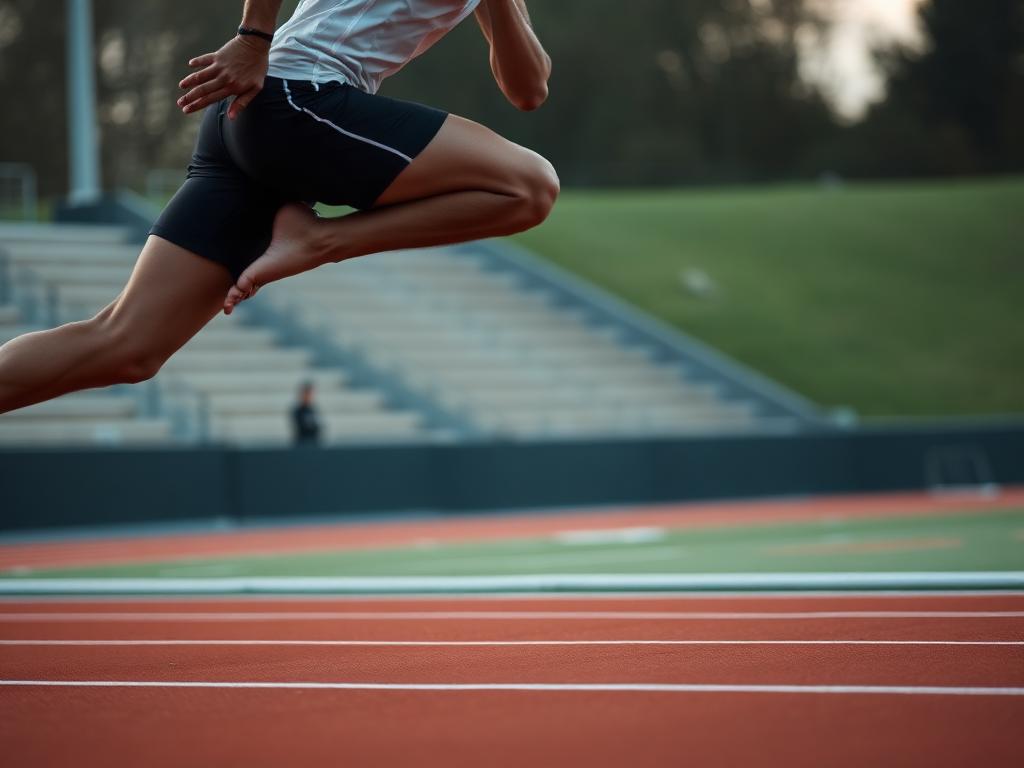
Quantify stride mechanics and asymmetry from club cam footage, no lab required.

Run a standardized gait assessment in seconds and archive it as a longitudinal record.
Science · Method
Our 3D reconstruction is benchmarked against OpenCap, a markerless, instrument-free method for measuring human movement in everyday environments. Rather than proprietary black boxes, we anchor joint-angle estimation to a published, reproducible pipeline and train temporal transformers on synthetic data rendered from openly licensed motion-capture corpora — a commercially clean, fully owned data path.
Reference
Uhlrich SD, et al. OpenCap: Human movement dynamics from smartphone videos. PLOS Computational Biology. 2023.
Stanford Neuromuscular Biomechanics Lab. Markerless estimation of 3D kinematics and kinetics in everyday environments from two smartphone videos.
Vision
The SDK flags deviations from matched population norms, surfacing movement anomalies early and enabling longitudinal movement-quality insights. Over time, anonymized and consented motion becomes a reference atlas of how healthy people move at every age — turning a single capture into a durable clinical signal.